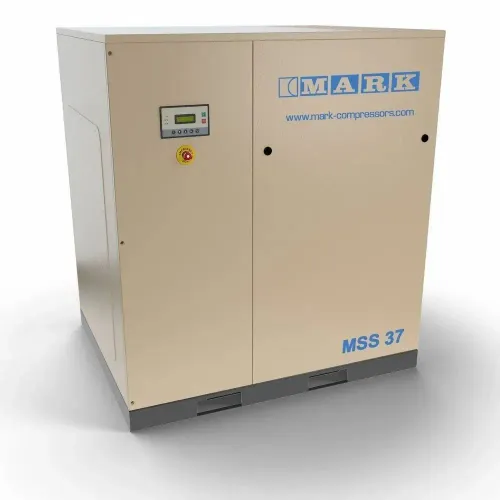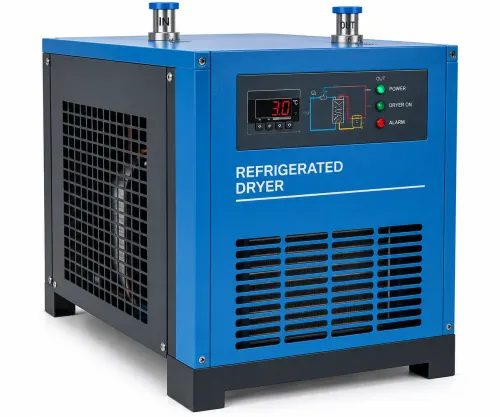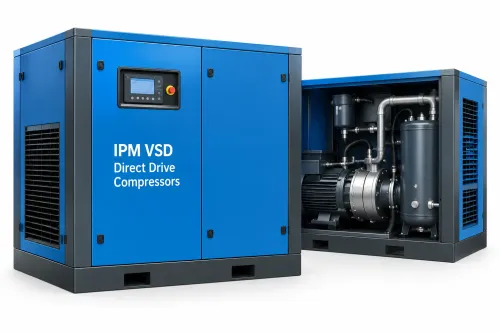
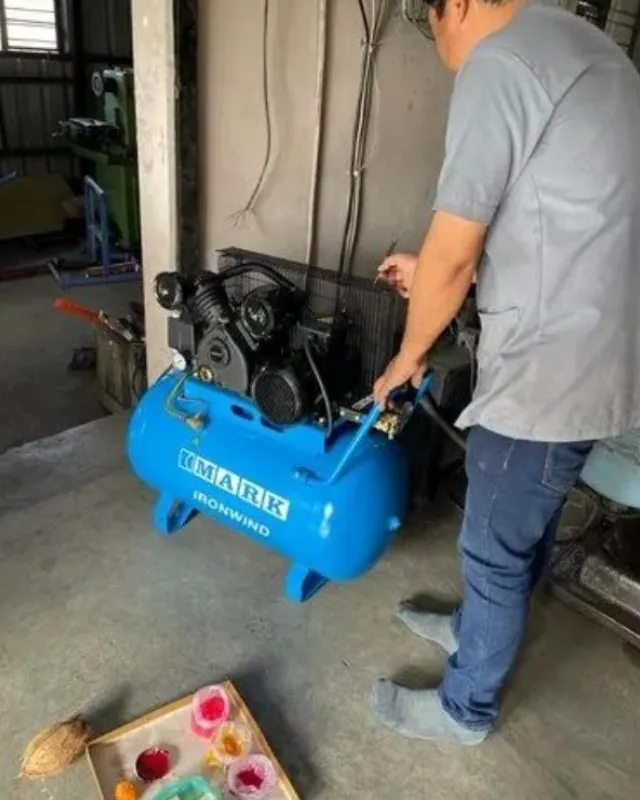
An Industrial Air Compressor is a critical utility in many manufacturing environments. It converts electrical or mechanical energy into compressed air that can be stored, distributed, then used to power equipment throughout a facility. In factories across Nashik, Maharashtra, compressed air may support production machinery, pneumatic tools, automation equipment, cleaning activities, material handling, packaging operations, plus maintenance work.
Understanding how the system works helps facility teams make better decisions about capacity, pressure, air quality, energy use, plus maintenance.
Why Compressed Air Is Used in Industry
Compressed air is flexible because it can be distributed through piping to multiple points within a plant. Depending on the facility, it may be used for pneumatic cylinders, actuators, tools, valves, process equipment, cleaning nozzles, packaging machinery, assembly stations, plus other applications.
The important point is that every application creates an air demand.
When several machines operate simultaneously, total demand can increase considerably. This is why compressor selection should be based on system demand rather than the requirement of one machine.
Pressure Is Only Part of the Requirement
A common mistake is to focus exclusively on pressure.
Pressure indicates the force available within the compressed-air system, while airflow indicates the volume of air being delivered. Industrial equipment needs both parameters to operate correctly.
If pressure is sufficient but airflow is inadequate, production equipment may still perform poorly during periods of high demand.
Facilities should therefore understand:
- Required operating pressure
- Total airflow demand
- Peak airflow requirement
- Usage pattern
- Daily operating duration
- Acceptable pressure variation
This information provides a clearer picture of the compressor duty.
Why Air Quality Matters
Atmospheric air contains moisture plus contaminants. Compression can concentrate these elements within the system.
Depending on the application, compressed air may therefore require treatment before reaching production equipment. Appropriate filtration plus moisture management can help protect pneumatic components, improve process reliability, plus reduce problems within the distribution network.
The required air quality depends on how compressed air is being used. General workshop tools may have different requirements from sensitive production equipment.
Storage Plays an Important Role
An air receiver provides storage within the compressed-air system. This stored volume can help manage short periods of increased demand while supporting more stable system operation.
However, additional storage does not solve every compressed-air problem. Persistent pressure loss may indicate insufficient compressor capacity, leaks, undersized piping, restricted filters, or excessive demand.
Understanding the cause is more effective than treating every pressure problem as a need for a larger compressor.
Energy Efficiency Deserves Attention
Compressed air can become expensive when systems are poorly managed.
Common sources of unnecessary energy consumption include:
- Air leaks
- Excessive pressure settings
- Incorrect compressor sizing
- Dirty filters
- Poor ventilation
- Inappropriate use of compressed air
- Unnecessary unloaded running
- Pressure losses within piping
Regular system checks can identify opportunities to improve performance without immediately replacing equipment.
Maintenance Protects Reliability
Industrial compressors require scheduled attention. Filters, lubricants, cooling systems, drive components, condensate management, plus other components may require inspection according to equipment design plus operating conditions.
Factories operating in dusty environments may require particularly careful attention to ventilation plus filtration.
Industrial users across Nashik can benefit from treating compressed air as a complete utility system rather than viewing the compressor as an isolated machine. Sahas Utility Services supports industrial requirements in this area, including equipment-related guidance for businesses evaluating compressed-air infrastructure.
A basic understanding of airflow, pressure, treatment, storage, energy consumption, plus maintenance gives plant teams a stronger foundation for managing compressed air efficiently. That knowledge can also make equipment discussions more productive when capacity additions or system upgrades become necessary.
Keywords